The first 70-degree weekend in Columbus brings the same calls every year — homeowners staring at a green winter cover, unsure what to touch first. Done right, opening a fiberglass pool takes a Saturday afternoon and you're swimming by the following weekend. Done wrong, you can lose the first three weeks of swim season fighting cloudy water, replacing damaged equipment, or flushing chemicals that should never have been added in that order.
This is the exact 8-step sequence Maxima Pools runs on every spring opening across Central Ohio — Columbus, Delaware, Dublin, Powell, Westerville, and out through the surrounding counties. Whether you're DIY-ing it or hiring it out, the steps are the same.
When to Actually Open
The internet says "open when temperatures hit 70°F." That's a half-answer. The real signal is water temperature consistently above 60°F.
Algae starts blooming around 60–65°F. If you wait until water hits 70°F to open, you're already inside the bloom window — green water before you even start. Open ahead of the temperature curve, not behind it.
In Central Ohio, that typically means:
- Mid-April: earliest reasonable opening for most pools
- Late April – early May: the sweet spot for most homeowners
- After May 15: you're playing catch-up against algae
Nighttime air temperatures matter too. Once nights consistently stay above 40°F, the pool can hold chlorine residue overnight and the chemical balancing actually sticks.
What You'll Need
Before you start, gather:
- Pool cover pump (submersible — not a wet-vac)
- Soft pool brush
- Telescoping pole and skimmer net
- Test kit (drops or strips — drops are more accurate)
- Chemicals: chlorine shock, alkalinity increaser, pH adjuster, calcium hardness increaser if needed, algaecide
- Backwash hose (if you have a sand or DE filter)
- Towels, gloves, a notebook for writing down test readings
Buy chemicals fresh. Last year's bottle of alkalinity increaser that sat in your garage through 30°F nights doesn't dose accurately. The cost of fresh chemistry is rounding error against the cost of a week of cloudy water.
The 8-Step Sequence
Run these in order. Skipping or reordering steps is the single biggest cause of opening problems.
1. Clean Off the Cover Before You Pump
Standing water on a winter cover is full of leaves, runoff, and whatever blew in over five months. Pumping it before removing debris on top sends contaminated water straight into the pool.
Use a leaf rake or pool net to pull off as much surface debris as possible. Then run the cover pump until water is gone. Once the cover is light, you can fold or roll it.
2. Remove and Inspect the Cover
Spread the cover on a flat surface. Hose it down with a mild soap solution, let it dry completely, then fold and store somewhere it won't crease in the same spot every year. Wet, folded covers rot.
While it's drying, inspect for tears, broken springs, or worn straps. A failing winter cover is cheaper to replace before October than to discover when your pool is already open in July.
3. Inspect the Pool Itself
Walk the perimeter before water comes back up to the skimmer line. Look for:
- Cracks or stress marks in the deck or coping
- Damaged tile, loose grout
- Skimmer baskets, pump lids, drain covers — all in place and intact
- Algae spots on the walls
- Stain rings near the water line
Fiberglass shells rarely show structural issues, but the surrounding deck and coping can shift through winter. Catching a hairline crack now is a $300 patch. Catching it in July is a half-summer of repair scheduling.
4. Reinstall Equipment and Fittings
Reattach drain plugs you removed at closing. Reinstall return-jet eyeballs, skimmer baskets, the pump basket, and any pressure gauges. Don't tighten plugs with a wrench — hand-tight plus a quarter turn is the right amount. Over-torqued plugs crack o-rings.
If you have an in-floor cleaning system or auto cover, follow the manufacturer's spring-prep instructions before continuing.
5. Fill, Then Prime — Not the Other Way Around
Top off the pool until water is above the middle of the skimmer mouth. Returning a dry pump to service is a fast way to score the seal — running a dry pump for even 30 seconds can cost you $400–$800 in a new shaft seal.
Once the water is high enough, prime the pump:
- Open the pump lid and fill the basket with water until it overflows
- Close the lid securely
- Open all return valves
- Turn the pump on and watch for water flow within 30–60 seconds
If water doesn't move within a minute, shut it off. Re-prime, check for air leaks at fittings, and try again. Don't let it run dry searching for prime.
6. Run the Filter for 24 Hours Before Adding Chemicals
This is the step DIYers most often skip and the single biggest cause of cloudy openings.
Run the filter circulation for a full day before you add any chemicals. The water mixes, debris circulates to the skimmer and main drain, and you get an accurate reading from the next test instead of testing a stratified pool with cold water at the bottom and warmer water on top.
For sand or DE filters, backwash before circulation — winter compaction means the filter is starting choked.
7. Test, Then Balance — In This Order
Order matters because each chemical interacts with the others.
- Total alkalinity first — target 80–120 ppm. Alkalinity is the buffer that keeps pH stable. A pool with low alkalinity will swing pH wildly with every chemical add.
- pH next — target 7.4–7.6. Use a small dose, retest after 4 hours, dose again if needed. Big pH swings shock the gel-coat surface.
- Calcium hardness — target 200–400 ppm. Soft water etches the gel coat over time; hard water scales the heater and tile.
- Chlorine and shock — only after the first three are in range. Shocking unbalanced water is how green pools become cloudy pools and stay that way for two weeks.
Test again the next morning. If alkalinity, pH, and calcium are stable and chlorine is in the 1–3 ppm range, you're done balancing.
8. Run Filter for 24 More Hours, Then Swim
After the shock, the filter pulls out the killed particulates over the next day. Don't go in immediately — chlorine levels will be high enough to bleach swimsuits and irritate skin.
By the next morning, water should be crystal clear and chlorine in the 1–3 ppm range. Now you swim.
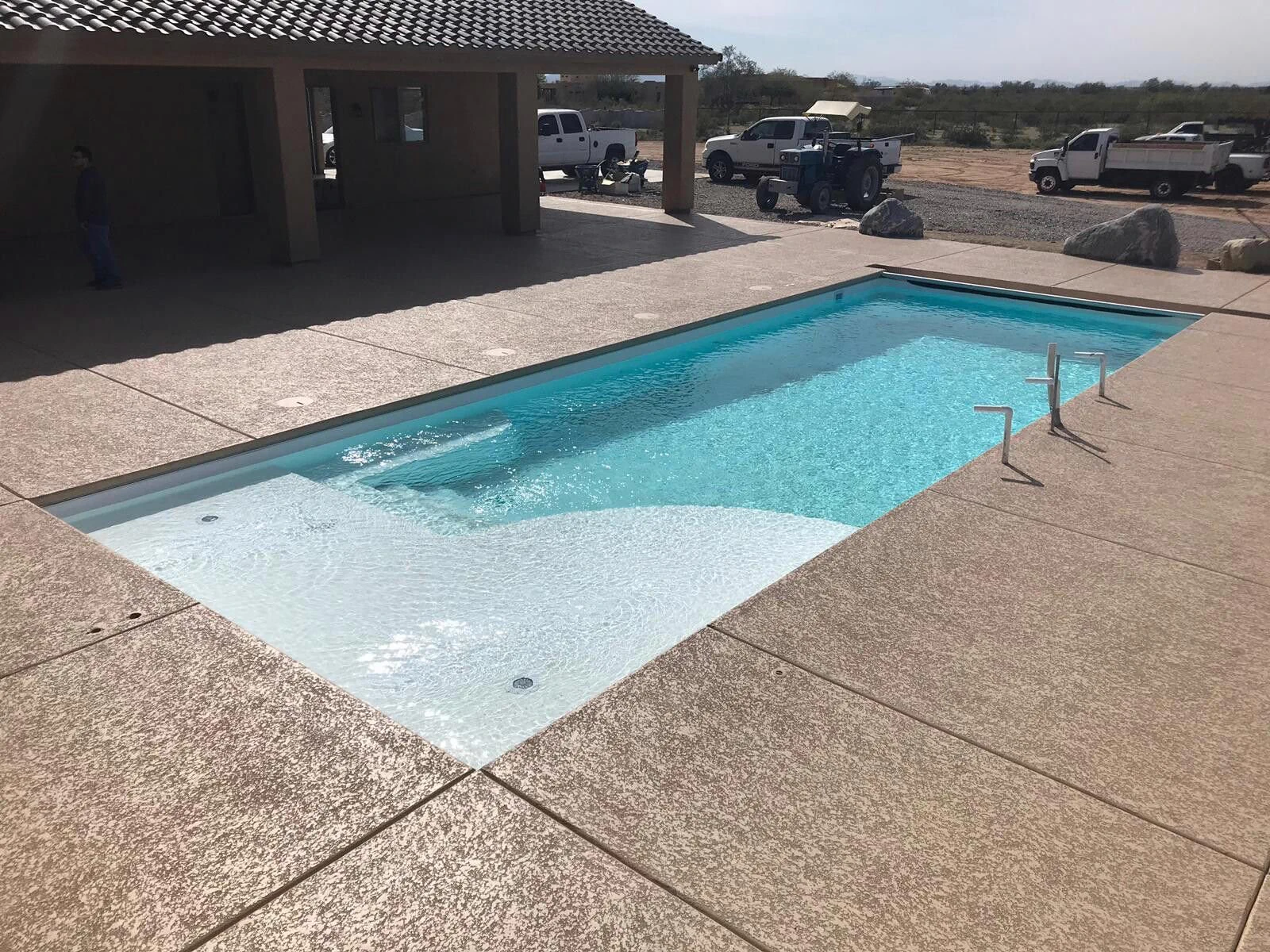
A clean opening sets the tone for the whole season. Crystal-clear Sully Blue water, balanced chemistry, and the filter doing the rest of the work for the next 20 weeks.
The Five Mistakes That Cost a Season
We get called in to rescue pools every spring. Five mistakes account for roughly 80% of the rescue calls.
- Pumping a dirty cover into the pool. Sets you back two weeks chasing organic load with chlorine.
- Running a dry pump. Scored seal means pump replacement — $1,500–$3,000 of avoidable cost.
- Adding chemicals before the filter has circulated. Inaccurate test reading leads to wrong dosing leads to chasing balance for ten days.
- Shocking unbalanced water. Cloudy pool that won't clear no matter how much chlorine you add. The fix is rebalancing first, then re-shocking — but the wasted time is real.
- Closing the wrong way the previous fall. This isn't a spring mistake but it shows up in spring. If the pool was closed without proper plumbing blow-out, freeze damage shows up in April when you turn the pump on. Read our pool closing guide.
DIY vs Hiring It Out
A pro spring opening in Central Ohio runs $350–$550 for a fiberglass pool, including water testing, balancing chemistry, and the first round of vacuuming. Including the cover removal, inspection, and equipment startup, expect a pro to spend 2–3 hours on site.
DIY breaks down roughly as:
- Time investment: 3–4 hours hands-on across 1–2 days
- Chemical cost: $80–$150
- Risk: $1,500+ if you damage the pump or chase a balance problem you can't diagnose
The math favors DIY if you've done it more than twice and the pool came out of winter clean. The math favors a pro if you closed the pool less-than-perfectly, you've never opened a pool yourself, or the shell shows any signs of trouble (stains, cracks, equipment that won't prime).
Book a spring opening with Maxima — we usually have availability within a week of the call across Central Ohio.
After Opening: The First Month
Even a clean opening needs some attention through the first month while water chemistry settles.
- Test water 2× per week for the first month, then weekly through summer
- Brush walls even on smooth fiberglass — biofilm starts thin, clears easy
- Empty skimmer baskets every couple of days through pollen season (peak: late April – mid-May in Central Ohio)
- Run the filter 8–12 hours/day through May, drop to 6–8 hours/day in summer
Expect to add a maintenance shock once or twice in May as the water warms and biological load increases. Less by mid-June.
Common Questions
When should I open my pool in Columbus, Ohio?
Open when daytime water temperatures consistently exceed 60°F — typically late April to early May in Central Ohio. Earlier openings (mid-April) are fine if you closed everything out properly the previous fall and don't mind running the filter on cooler water.
Can I open a pool myself or do I need a pro?
You can open a fiberglass pool yourself if you've done it before and the previous fall closing was clean. First-time openers are usually better off hiring it out the first year, learning the steps, then DIY-ing future seasons.
How much does a professional pool opening cost in Ohio?
Most fiberglass pools open in the $350–$550 range depending on pool size, equipment complexity, and any additional services like auto-cover startup or heater commissioning. Get a quote for your specific pool.
Why is my pool water green after opening?
Green water means algae bloomed before you established a chlorine residual. The fix: balance alkalinity and pH first, then double-shock, then run the filter 24 hours continuously. Most green pools clear within 48–72 hours of correct treatment.
Should I drain my fiberglass pool to clean it?
No — never fully drain a fiberglass pool. The shell relies on water pressure to counterbalance soil pressure outside. Draining can cause the shell to pop or shift, especially in clay-heavy Central Ohio soil. Lower the level no more than 6 inches below the skimmer for any work.
What temperature should water be when I open?
Above 50°F at minimum, above 60°F preferred. Below 50°F you can technically open but chemicals don't dissolve and disperse evenly, so balancing takes longer.
How often should I shock my pool after opening?
A maintenance shock once a week through May is typical for a Central Ohio pool, then every 2–3 weeks through summer unless heavy use or rain pushes the chemistry. Test before every shock — never shock blind.
Get Help When You Need It
If anything looks off — stained walls after washing, equipment that hums but doesn't move water, water that won't clear after a balanced shock — call before you spend a weekend troubleshooting. Diagnosing in person takes 20 minutes; troubleshooting from a video takes hours.
Book a spring opening · See our pool accessories and equipment services · Why homeowners choose Maxima Pools